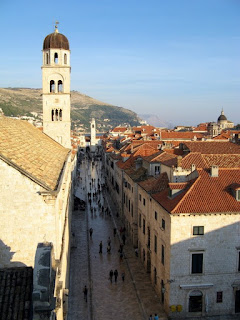
Baščaršija (Old Town)

We enjoyed our two days exploring Sarajevo, and the fact that we didn’t know much about the place or what to expect added to the excitement. The weather was fine, although the chill in the air signalled the altitude and the coming winter. A thin mist hung in the sky above the city and its enclosing hills, softening the autumnal sunshine which slanted onto the streets and parks.
Sarajevo has a bustling, cosmopolitan atmosphere, and wandering around the old town, with its markets and minarets, cobbled streets and coffee shops, the visitor is struck by the feeling of being at the crossroads of east and west. Which Sarajevo always has been. Having being part of the Ottoman and Austro-Hungarian empires, then communist Yugoslavia, it now is the capital of the independant state of Bosnia-Herzegovina.


 While wandering in the Baščaršija neighborhood we came across the Gazi Husrev-Beg Mosque, often referred to as the Beg's Mosque. Built in 1531, it is considered one of the world's finest examples of Ottoman architecture.
 Washing fountain, Gazi Husrev-Beg Mosque


It was here on 1914 that an act of nationalist-inspired rebellion occurred that was to have massive and catastrophic consequences for the world. In the event that triggered World War I, Archduke Franz Ferdinand of Austria, the heir to the Hapsburg throne, and his wife Sophie, were assassinated on 28 June 1914 by a Serb, Gavrilo Princip. The building outside of which Princip fired the shots is now a museum of Sarajevo during the Austro-Hungarian period, including information on the assassination.
 Latin Bridge. Assassination Site is in front of corner building with the arched ground floor windows (now a museum)
As well as learning about Sarajevo's hisotry, we also got to sample some Bosnian delicacies, such as Bosnian Coffee:

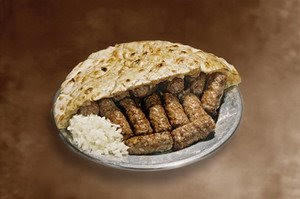
 And Ćevapi - A Bosnian specialty consisting of small dumplings of minced meat, mixed with garlic, onion and spices, grilled and served in pita bread with chopped onion on the side. I was impressed with my effort of eating one about the size of the one below (12 Ćevapi).
The city appears to have largely recovered from the devastating siege of 1992 to 1996, although many buildings still bear the scars of mortar and tank bombardment. The siege was fought between the defending forces of the Bosnian Government, who had declared independence from Yugoslavia, and the Yugoslav People's Army (JNA) and Bosnian Serb forces located in the surrounding hills. It is estimated that more than 12,000 people were killed and 50,000 were wounded during the siege. The residents endured harsh living conditions during the 4 year siege, having no electricity or running water and living from rations flown in by the UN.
 Map Showing the Serbian Positions Surrounding Sarajevo During the Siege
We took a tour to visit the tunnel dug by the Bosnians during the siege to ferry people and supplies in and out of the surrounded city. The tunnel went underneath the airport to the free Bosnian territory on the other side. The tunnel was one of the major ways of bypassing the international arms embargo (which was applied to all parties to the Bosnian conflict, including the defenders of Sarajevo) and providing the city defenders with weaponry.
 Sarajevo Airport, from the Tunnel Entrance
 Building Housing the Tunnel Entrance

 Tunnel
On our last morning in Sarajevo we visited Svrzina kuca (Svrzo house), a beautiful old Ottoman house built in the 18th century that shows how wealthy families would have lived in that time.


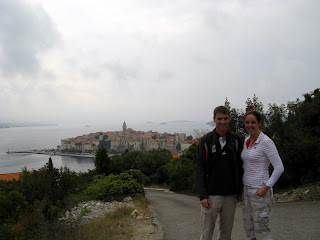

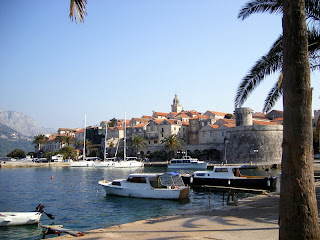
 Our accommodation for the next 5 nights was a three bedroom apartment owned by Slobodan Vrantjes and his wife, who lived upstairs. They were most hospitable and provided us with dinner on our first night as well as wine from Slobodan's own winery.

 The apartment was in Medvinjak, about a 15 minute walk from Korcula town. The view from the deck was impressive.
 A real plus was that there was a nice swimming beach just down the road from the apartment, which we made use of:
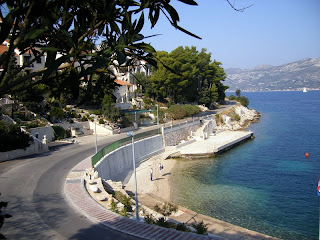
 On our first full day in Korcula we had an al fresco lunch and organised a rental car which proved to be very handy for nipping in and out of town.
 Even though Korcula was winding down for the winter, we still found plenty of nice cafes for coffees:

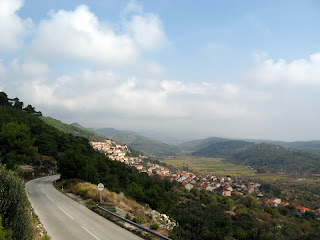
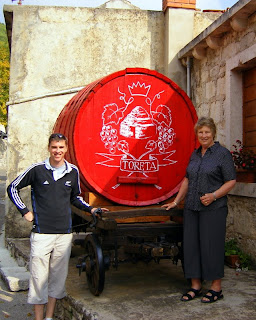

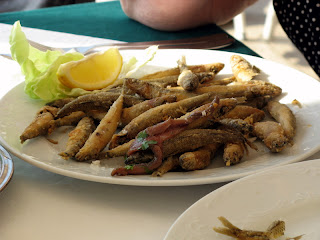
 Mum's Fish Lunch - Not One I would Recommend

 Maz Outside our Apartment in Dubrovnik

 Another View out of our Kitchen Window